Managing cloud expenses doesn’t have to feel like navigating a maze blindfolded. With the right tools—like Azure Price Cal—you can gain full control over your Microsoft Azure spending, forecast budgets accurately, and avoid bill shock. Let’s dive into how this powerful tool transforms cloud cost management from guesswork into strategy.




What Is Azure Price Cal and Why It Matters

The term azure price cal refers to the suite of pricing calculators and cost estimation tools offered by Microsoft Azure. These tools are essential for businesses, developers, and IT managers who want to forecast, analyze, and optimize their cloud spending before deployment. Unlike traditional infrastructure models, cloud computing operates on a pay-as-you-go basis, making accurate cost prediction critical.
Understanding the Core Purpose of Azure Price Cal
The primary goal of Azure Price Cal is to provide users with a clear, real-time estimate of what their cloud resources will cost. Whether you’re planning a small web app or a large-scale enterprise solution, the calculator allows you to input specific configurations—such as VM size, storage type, data transfer volume, and region—and instantly see the projected monthly or hourly cost.
- Eliminates financial surprises after deployment
- Supports decision-making for resource selection
- Enables comparison between different service tiers
How Azure Price Cal Differs from Other Cloud Calculators
While AWS and Google Cloud offer similar tools, azure price cal stands out due to its deep integration with Azure’s ecosystem. For example, it includes built-in recommendations based on Microsoft’s pricing models, such as reserved instances, hybrid benefits, and spot pricing. It also supports complex architectures involving multiple services like Azure Kubernetes Service (AKS), Logic Apps, and Azure Functions.
“The Azure Pricing Calculator isn’t just a number generator—it’s a strategic planning tool that aligns technical decisions with financial outcomes.” — Microsoft Azure Architect, 2023
Step-by-Step Guide to Using Azure Price Cal
Using the azure price cal tool is straightforward, but mastering it requires understanding each step and how to interpret the results. Below is a detailed walkthrough to help both beginners and advanced users get the most out of this resource.
Step 1: Accessing the Azure Pricing Calculator
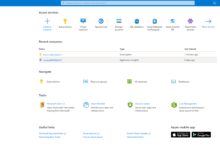
To begin, visit the official Azure Pricing Calculator page. No login is required to start building your estimate, though saving or sharing projects requires a Microsoft account. The interface is clean, intuitive, and organized by service categories such as Compute, Networking, Storage, and AI + Machine Learning.
- Search bar allows quick access to any service
- Drag-and-drop functionality for adding items to your estimate
- Real-time cost updates as you modify configurations
Step 2: Building Your Cloud Architecture Estimate
Once you’ve accessed the calculator, start adding the services your project will use. For example, if you’re deploying a virtual machine, search for ‘Virtual Machines’ and select the appropriate OS (Windows or Linux), series (e.g., Dv3, Ev4), and region. You can also specify whether you plan to use pay-as-you-go, reserved instances, or spot pricing.
Each selection dynamically updates the total cost. You can add multiple VMs, configure auto-scaling groups, and even include associated disks and networking components like public IPs and load balancers.
Step 3: Refining and Exporting Your Estimate
After building your initial estimate, refine it by adjusting quantities, regions, and usage patterns. The calculator allows you to set monthly usage hours (e.g., 720 for full-time operation), data transfer amounts, and redundancy options. Once satisfied, you can export the estimate as a CSV file or share it via a secure link.
- Export options support integration with financial planning tools
- Shared links can be password-protected for security
- Estimates can be saved and revisited later
Key Features That Make Azure Price Cal a Game-Changer
The azure price cal tool isn’t just about adding up prices—it’s packed with intelligent features that empower users to make smarter financial decisions. Let’s explore some of the most impactful functionalities.
Real-Time Cost Adjustment and Scenario Modeling
One of the standout features of azure price cal is its ability to model different deployment scenarios in real time. Want to compare the cost of running 10 VMs in East US versus West Europe? Simply duplicate your estimate and change the region. Need to evaluate the savings from switching to reserved instances? Adjust the billing model and watch the numbers update instantly.
This dynamic modeling capability is invaluable for teams conducting cost-benefit analyses or presenting options to stakeholders.
Integration with Azure Advisor and Cost Management
While the pricing calculator is great for pre-deployment planning, it works hand-in-hand with Azure Cost Management + Billing and Azure Advisor for ongoing optimization. After deployment, these tools provide actual usage data, which can be compared against your original azure price cal estimates to identify variances and inefficiencies.
- Azure Advisor recommends cost-saving actions (e.g., resizing underutilized VMs)
- Campaigns like ‘Reserved Instance Recommendations’ are based on historical usage
- Alerts can be set when spending exceeds forecasted thresholds
Support for Hybrid and Multi-Cloud Scenarios
For organizations using hybrid cloud setups (on-premises + Azure), the azure price cal includes options for Azure Hybrid Benefit, which allows you to use existing Windows Server or SQL Server licenses to reduce costs. This feature alone can save up to 40% on certain workloads.
While the calculator is Azure-centric, it can still be used to estimate costs when integrating with other clouds via Azure Arc or Azure Stack.
Common Mistakes When Using Azure Price Cal (And How to Avoid Them)
Even experienced users can fall into traps when estimating cloud costs. Understanding these common pitfalls is crucial to getting accurate results from the azure price cal tool.
Underestimating Data Transfer and Egress Fees
One of the most frequent oversights is ignoring data egress charges—the cost of moving data out of Azure. While inbound data is usually free, outbound transfers (especially to regions outside Azure or to the internet) can add up quickly. For example, transferring 10 TB of data from East US to a user in Asia could cost hundreds of dollars per month.
Solution: Always include realistic egress estimates in your azure price cal model. Use the ‘Networking’ section to input expected outbound data volumes.
Overlooking Hidden Costs Like Snapshots and Backups
It’s easy to account for VMs and storage, but ancillary services like snapshots, backup policies, and monitoring tools often get missed. For instance, Azure Backup charges per protected instance and stored data, while Application Insights can incur costs based on telemetry volume.
Solution: Expand your estimate to include all operational services. Use the ‘Monitoring’ and ‘Security’ categories in the calculator to add these components.
Ignoring Reserved Instance Commitments and Discounts
Many users stick to pay-as-you-go pricing in the azure price cal, missing out on significant savings from one- or three-year reservations. Depending on the service, reserved instances can reduce costs by up to 72%.
Solution: Experiment with the ‘Reserved’ option in the calculator. If your workload is stable and long-term, reservations are almost always more cost-effective.
Advanced Tips to Maximize Savings with Azure Price Cal
Once you’ve mastered the basics, it’s time to level up. These advanced strategies will help you squeeze every dollar of value from your Azure investment using the azure price cal tool.
Leverage Spot VMs for Non-Critical Workloads
Spot Virtual Machines offer massive discounts—up to 90% off regular prices—for workloads that can tolerate interruptions. They’re ideal for batch processing, testing environments, or high-performance computing tasks.
In the azure price cal, you can select ‘Spot’ as the VM pricing model to see potential savings. Just remember to design your applications to handle sudden shutdowns.
Optimize Region Selection for Cost and Performance
Not all Azure regions are priced the same. For example, VMs in North Europe are often cheaper than in Southeast Asia. However, choosing a distant region can increase latency and egress costs.
Use the azure price cal to compare regional pricing and balance cost with user proximity. If your users are primarily in India, consider using India Central or South India regions for optimal performance and pricing.
Combine Azure Price Cal with Total Cost of Ownership (TCO) Tools
For organizations migrating from on-premises infrastructure, Microsoft offers a TCO Calculator that works alongside the azure price cal. This tool compares the long-term costs of on-premises data centers versus Azure, factoring in hardware, power, cooling, and IT labor.
By using both tools together, you can build a compelling business case for cloud migration.
Real-World Use Cases of Azure Price Cal in Action
Theoretical knowledge is valuable, but seeing azure price cal in action makes its impact clear. Here are three real-world scenarios where the tool made a tangible difference.
Startup Launching a SaaS Platform
A tech startup planning to launch a SaaS product used azure price cal to model their infrastructure across three stages: MVP, growth, and scale. They started with a basic setup (App Service, SQL Database, Blob Storage) and projected costs for 1,000, 10,000, and 100,000 users.
The calculator helped them identify that switching to Cosmos DB at scale would reduce latency and long-term costs. They also discovered that reserved instances for their core services could save over $15,000 annually.
Enterprise Migrating Legacy Applications
A global bank migrating 50 legacy applications to Azure used azure price cal to create detailed cost models for each workload. By applying Azure Hybrid Benefit and reserved instances, they reduced their estimated annual spend by 38% compared to initial pay-as-you-go projections.
The team also used the export feature to share cost models with finance and compliance departments, accelerating approval processes.
DevOps Team Optimizing CI/CD Pipelines
A software development team wanted to optimize their Azure DevOps pipelines. Using azure price cal, they estimated the cost of self-hosted agents versus Microsoft-hosted ones. They found that for their usage pattern (100 hours/month), self-hosted agents on a reserved VM were 60% cheaper.
This insight led to a policy change and significant savings across all development teams.
Future of Azure Price Cal: What’s Next?
As cloud environments grow more complex, so too must the tools we use to manage them. Microsoft is continuously enhancing the azure price cal experience with AI-driven insights, predictive analytics, and deeper integration with financial operations (FinOps) frameworks.
AI-Powered Cost Forecasting
Rumors suggest Microsoft is developing AI models that will integrate with azure price cal to predict future costs based on historical trends, seasonal usage spikes, and business growth projections. This would move the tool from reactive estimation to proactive financial planning.
Enhanced Multi-Cloud Cost Comparison
While currently Azure-focused, future versions may allow side-by-side comparisons with AWS and Google Cloud pricing. This would be a game-changer for organizations evaluating multi-cloud strategies or negotiating vendor contracts.
Integration with FinOps Tooling
The rise of FinOps (Financial Operations) has created demand for tools that bridge finance and engineering. Future updates to azure price cal may include direct integration with platforms like Cloudability, Apptio, or Flexera, enabling seamless cost allocation, chargeback, and showback reporting.
How accurate is Azure Price Cal?
The Azure Price Cal provides highly accurate estimates based on current pricing models and configurations. However, actual costs may vary due to usage fluctuations, unaccounted services, or changes in Microsoft’s pricing. It’s best used as a planning tool rather than a billing guarantee.
Can I use Azure Price Cal for reserved instances?
Yes, the Azure Price Cal allows you to model costs using reserved instances for services like Virtual Machines, SQL Database, and Cosmos DB. You can select 1-year or 3-year terms and see the discounted rates in real time.
Is the Azure Price Cal free to use?
Absolutely. The Azure Price Cal is a free tool provided by Microsoft. No account is required to start creating estimates, though signing in allows you to save, share, and collaborate on projects.
Does Azure Price Cal include taxes and support costs?
By default, the calculator shows pre-tax estimates. You can toggle to include estimated taxes based on your country/region. Support plans (e.g., Standard, Professional Direct) can also be added separately in the ‘Support’ section.
How does Azure Price Cal help with budgeting?
Azure Price Cal enables proactive budgeting by allowing teams to simulate various deployment scenarios, compare costs, and identify savings opportunities before spending a single dollar. It integrates with Azure Budgets to set alerts and enforce spending limits post-deployment.
The azure price cal tool is far more than a simple cost estimator—it’s a strategic asset for any organization leveraging Microsoft Azure. From startups to enterprises, its ability to forecast, compare, and optimize cloud spending empowers smarter decision-making. By avoiding common pitfalls, leveraging advanced features like reserved instances and spot pricing, and integrating with broader FinOps practices, you can transform cloud cost management from a challenge into a competitive advantage. As Microsoft continues to innovate, the future of azure price cal promises even greater intelligence and integration, making it an indispensable tool in the modern cloud toolkit.
Further Reading: